
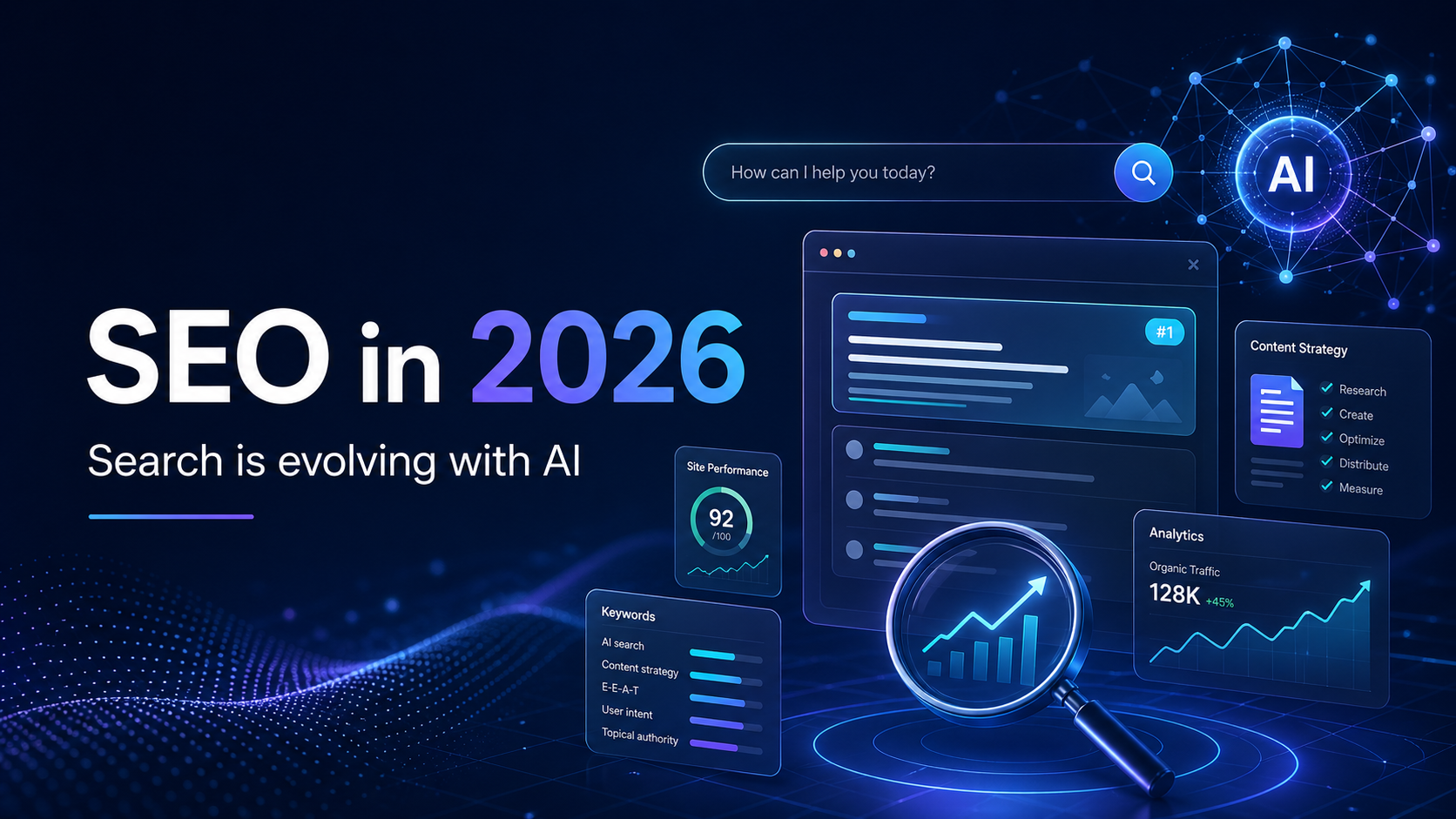
For years, many people have predicted “the death of SEO”. However, in 2026, the reality looks very different: SEO has not disappeared. It has become more demanding.
The rise of AI-generated answers, automatic summaries, rich results, and increasingly conversational searches is forcing brands, businesses, and content creators to rethink their strategy. Google explains that AI features such as AI Overviews and AI Mode still rely on traditional SEO best practices: helpful content, technically accessible pages, and websites that can be properly crawled and indexed.
Search Is No Longer Just a List of Links
Until recently, the main goal was to appear as high as possible in Google’s classic search results. That goal is still important, but it now exists within a much broader search experience.
A page can gain visibility in different ways: as a traditional organic result, as a source in an AI-generated answer, as a featured snippet, as a rich result, or as supporting content for a more complex query.
According to Google, in order to appear as a supporting link in AI-powered search features, a page must be indexed and eligible to appear in Search with a snippet. There is no special “secret optimization” exclusively for AI Overviews or AI Mode. The foundation remains the same: meet the technical basics and create useful content for people.
Thin Content Is Losing Power
In 2026, publishing long texts filled with keywords is no longer enough. In fact, it can hurt performance if the content does not properly answer the user’s real intent.
Search engines and AI systems need to clearly understand what a page offers, who it is useful for, and why it should be trusted. This is why content with real experience, concrete examples, verifiable data, clear structure, and complete answers is becoming more valuable.
Google’s systems aim to prioritize helpful, reliable information created to benefit people, not content produced only to manipulate search rankings.
Technical SEO Still Matters
Even though AI is getting most of the attention, technical SEO has not lost its value. Quite the opposite: if a website loads slowly, has indexing issues, duplicate titles, poor content, weak structure, or pages that Google cannot crawl properly, it will struggle to compete.
In 2026, a solid SEO strategy should include regular checks for:
- crawling and indexing;
- titles and meta descriptions;
- well-organized headings;
- structured data;
- internal linking;
- page speed;
- mobile experience;
- duplicate or cannibalized content;
- outdated pages that need improvement.
Google reminds website owners that SEO helps search engines understand content and helps users decide whether a page is worth visiting. It also makes clear that there is no secret formula to automatically rank first: meaningful SEO improvements can take weeks or even months to show results.
Brand Authority Matters More Than Ever
Another major shift is that SEO no longer exists only inside a website. A brand’s presence across the web also affects how it is perceived: social media profiles, business listings, media mentions, reviews, directories, external content, and trust signals all play a role.
When users search for a brand, product, or service, they expect consistency. If the website says one thing, social media says another, and reviews create doubt, trust is weakened.
That is why, in 2026, working on SEO also means organizing and strengthening the full digital identity of a business.
What Websites Should Do in 2026
The main recommendation is simple: stop writing to “trick the algorithm” and start building pages that are genuinely useful.
A website that wants to grow in search this year should:
- Answer real questions from potential customers.
- Update old content.
- Improve the structure of each page.
- Use clear and specific titles.
- Add examples, data, and original context.
- Take care of speed and mobile experience.
- Review Google Search Console frequently.
- Avoid generic content generated without strategy.
- Build brand authority and trust.
- Measure conversions, not just rankings.
The New SEO Combines Humans, Data, and Artificial Intelligence
Artificial intelligence can help with research, idea organization, opportunity detection, and process improvement. But the real difference still comes from human judgment: understanding what users need, what doubts they have before buying, what objections appear, and what information is missing before they can make a decision.
SEO in 2026 is not less important. It is more strategic.
It is no longer only about getting traffic. It is about gaining useful visibility: appearing when a person truly needs an answer, a solution, a comparison, or a decision.
Conclusion
SEO in 2026 is not dead. It has changed shape.
Websites that rely on automatic, repetitive, or low-trust content will face increasing difficulties. On the other hand, websites that combine strong content, technical structure, authority, clarity, and real experience will continue to find opportunities.
Search has become smarter. SEO strategies need to become smarter too.